

Author: Manassés Lopes
Changes in consumer relations have sparked intense legal debates, especially when considering the rise of contractual models and the complexity of digital products and services.
In this context, the discipline of Contemporary Consumer Law in postgraduate programs in Private and Business Law emerges as essential for understanding and acting within current legal dynamics, preparing lawyers for the challenges of the digital age.
To begin our discussion, we start from the premise that electronic contracts are, in fact, the foundation of commercial transactions in the digital age. They have eliminated physical barriers, allowing business deals to be made quickly and easily.
However, this ease of use has brought new challenges that require detailed technical analysis to ensure its validity and effectiveness.
Classic elements such as consent and lawful purpose remain indispensable. However, contemporary issues, such as cybersecurity, the transparency of contractual clauses, and consumer understanding of complex terms, have taken center stage.

The question of the validity of electronic contracts.
The validity of an electronic contract depends, first and foremost, on the clear expression of will by the parties. However, in the virtual environment, this expression is frequently questioned.
Terms of service accepted with a simple click — so-called clickwrap contracts — may be considered valid, but legal analysis must assess whether the consumer was actually able to understand the imposed clauses.
As Professor Cláudia Lima Marques, who is part of the faculty at IDP's Postgraduate Program in Private and Business Law , points out, consumer protection should be based not only on their economic vulnerability, but also on their technical and informational vulnerability, especially in a context where technologies evolve faster than legislation.
The challenges of clarity and understanding are compounded by abusive contractual practices, such as the insertion of hidden clauses within lengthy terms of use.
Many consumers, for example, do not realize that when subscribing to a streaming service , they may be consenting to the sharing of their data for advertising purposes, without this being clearly stated.
In this regard, the Superior Court of Justice, in its rulings, has already highlighted that electronic adhesion contracts require increased protection for consumers in situations of vulnerability, especially when informational asymmetry compromises their ability to make informed decisions.
Protecting trust in digital contracts
In addition to clarity, the security of digital systems is a crucial issue for the legal effectiveness of electronic contracts.
Trust in the digital environment depends on mechanisms that guarantee the authenticity, integrity, and confidentiality of transactions.
Electronic signatures, cryptography, and digital certificates are essential tools in this context, but even these technologies are not infallible.
The significant increase in financial scams, such as those reported by G1 , exposes the weaknesses of digital systems and the urgent need for more robust regulations.
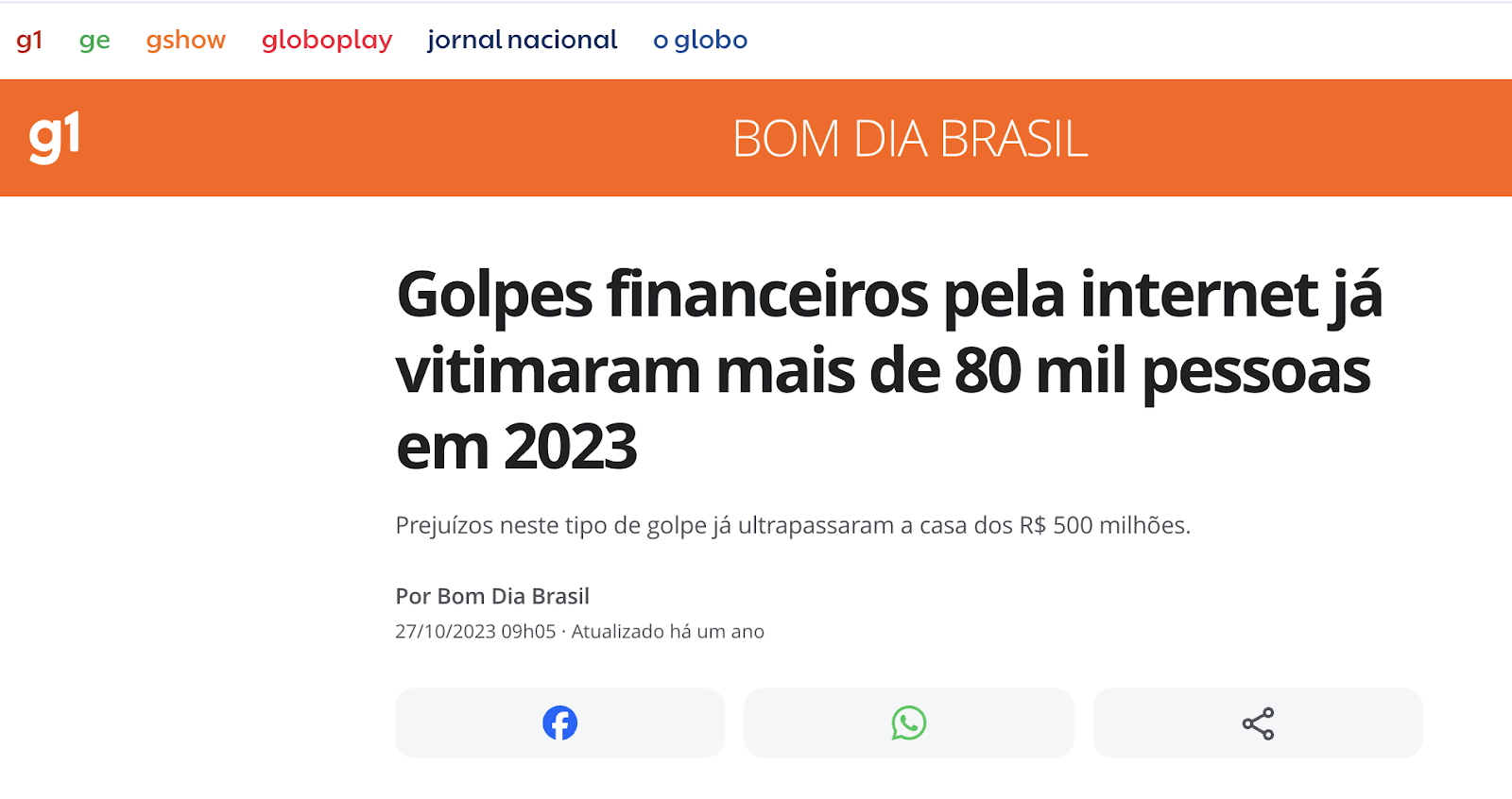
The numbers are alarming: in 2023, more than 80 people were victims of internet fraud.
Many of these scams involve fraudulent electronic contracts, where consumers are tricked into providing sensitive information or making payments to non-existent companies.
These cases highlight the need for specialist lawyers to identify irregularities and seek redress.
Legal action ranges from detailed contract analysis to holding those involved accountable, often touching upon issues of digital law and data protection.
And what about contracts signed digitally?
It is also worth highlighting the enactment of Law 14.620/2023, legislation that brought an important update to the Code of Civil Procedure, making the requirements for electronic documents to be considered extrajudicial enforceable instruments more flexible.
Prior to this change, the requirement for two witnesses to sign was a central requirement to guarantee the enforceability of private documents, as stipulated in article 784, III, of the CPC (Code of Civil Procedure).
Now, with the inclusion of paragraph 4 in article 784 of the CPC (Brazilian Code of Civil Procedure), electronically signed documents can be recognized as enforceable instruments without the need for witnesses, provided that the integrity of the signature is verified by an electronic signature provider.
This legal innovation reflects a trend already established in case law.
In 2018, the Superior Court of Justice (STJ), in the judgment of REsp 1.495.920-DF, recognized the enforceability of electronically signed contracts, even without the presence of witnesses, provided that the signature was certified by a competent authority.
The Superior Court of Justice's decision was based on the understanding that digital signatures, guaranteed by the asymmetric cryptography standard, are capable of ensuring the authenticity and integrity of the document, effectively replacing the role played by witnesses in traditional contracts.
The Provisional Measure that established ICP-Brasil
This legislative evolution has gained relevance in a context where digital transactions are becoming increasingly frequent.
Provisional Measure 2.200-2/2001, which established the Brazilian Public Key Infrastructure (ICP-Brasil), already provided for the legal validity of electronic documents signed with digital certification.
This certification, managed by a certification authority, uses a public key system to guarantee that the document was effectively signed by the designated signatory, thus being presumed true and valid.
With the legal backing of the Provisional Measure and the new wording of the Code of Civil Procedure, Brazil is taking a step forward in modernizing and streamlining the system.
And at the end of the day, simplifying the requirements for its enforceability meets the demand for a more agile legal practice that is better adapted to new technologies.
It is important to highlight that simplifying the requirements for the enforceability of electronic contracts does not eliminate the challenges arising from potential flaws in these instruments.
It is precisely at this point that the study of civil liability becomes so necessary, because it establishes the mechanisms for dealing with defects in digital products and services.
The result of these failures is the system of civil liability.
In the context of civil liability, electronic contracts are directly connected to the issue of "defects" in digital products and services.
The strict liability foreseen in the Consumer Protection Code was designed to protect consumers from damages caused by defects, but the application of this concept needs to be broadened to consider the specificities of the digital environment.
The Consumer Protection Code, in its articles 12 and 14, defines that the manufacturer, producer, builder, and importer are objectively liable for damages caused by defects or flaws in their products.
Consumer law doctrine teaches that these problems can manifest themselves not only in the functionality of a digital product, but also in the security it offers.
A banking app that allows unauthorized access to consumer data, for example, has both a technical and a legal defect.
Connected devices (IoT), such as Alexa, smart cameras, and self-driving vehicles, are examples that illustrate the need to adapt regulations.
Imagine a smart thermostat that, due to a security flaw, exposes information about the consumer's routine, such as the times when the house is empty.
Who is responsible in these cases? The hardware manufacturer , who neglected security, or the software developer, who failed to implement adequate protocols?
These dilemmas require an interdisciplinary analysis, considering both civil liability and data protection legislation.
The postgraduate course in Private and Business Law prepares lawyers to identify the elements necessary to establish civil liability and to develop strategies for redress.
The Profitability of Legal Practice in Consumer Law
A survey conducted by the Brazilian Bar Association in São Paulo (OAB/SP) revealed that Consumer Law is the most lucrative area for lawyers in the state, with an average monthly salary of R$ 10,7.
Despite this high profitability, only 6,8% of lawyers work in this field, highlighting a market gap and a great opportunity for those who decide to invest in specialization.
In contrast, Civil Law, which has the largest number of professionals (57,3%), ranks only seventh in profitability, with average monthly earnings of R$ 9,2.
This data reinforces the idea that specific areas, such as Consumer Law, can provide higher financial returns and less competition.
The IDP postgraduate program in Private and Business Law , with subjects such as Contemporary Consumer Law and Current Civil Liability, was designed to empower lawyers to strategically explore this market potential.
One of the course's major distinguishing features is its interdisciplinary approach, which connects topics such as electronic contracts, civil liability, and piercing the corporate veil.
This integration allows the student to develop a practical perspective, essential for dealing with the complexities of current cases.
For example, analyzing a fraudulent electronic contract may require the application of concepts of civil liability and, in more serious cases, the use of theories of piercing the corporate veil to ensure redress for the consumer.
In addition to robust technical content, IDP's postgraduate program adopts a practical methodology, with case studies and debates on recent jurisprudence. This approach ensures that students are prepared for the challenges of the contemporary legal market.
The professors, recognized for their practical and academic experience, offer training that goes beyond theory, providing insights that help students excel in the market.
Contemporary Consumer Law is not just a legal field; it's an opportunity for professional growth and differentiation.

References
Giancoli, Brunno. Consumer Law Course – 6th Edition 2024. Available at: My Library, (6th edition). GEN Group, 2024.
Miragem, Bruno. Consumer Law Course – 9th Edition 2024. Available at: My Library, (9th edition). GEN Group, 2024.
Filho, José Augusto P. Essential Method Collection – Consumer Law – 2nd Edition 2022. Available at: My Library, (2nd edition). GEN Group, 2022.
