Professional Master's Degree in
Public Administration – Brasília
BUILD TOMORROW.

Discover the Course

From an interdisciplinary perspective, the Professional Master's Program in Public Administration (MPAP) is a stricto sensu program, approved and recommended by CAPES, that prioritizes the application of theoretical knowledge to solving problems related to the formulation, monitoring, and evaluation of public policies and government management.

What to expect from a Master's degree in Public Administration?

A Professional Master's Degree

The market increasingly demands qualified professionals with analytical and practical skills.

One of the main characteristics of the MPAP is its teaching methodology, which, in addition to a solid theoretical foundation, pays special attention to the analysis of case studies and practical applications of knowledge to public management.

Furthermore, the course is concentrated on Fridays and Saturdays, in order to allow the participation of professionals who seek to reconcile their participation in the master's program with their professional practice.

Modality

Professional Master's

Class schedule

Friday (14:00 PM to 9:40 PM) and Saturday (21:00 AM to 17:40 PM)

Beginning of Classes

September/February

WORKLOAD

600 hours long.

Faculty

The main distinguishing feature of MPAP is undoubtedly the qualification of its faculty, composed of professors who, in addition to standing out for their high and diverse academic qualifications, are also characterized by performing relevant functions in the upper echelons of the public sector.

This is a fundamental aspect of the program, since it allows students to present, analyze, and discuss ways to apply the theoretical tools presented in each subject to the reality of Public Administration, which emphasizes the professional nature of the course.

Francisco Gaetani

ILANA TROMBKA

Doctor of Business Administration from the Getulio Vargas Foundation. Director-General of the Federal Senate.

PAULO ALEXANDRE BATISTA DE CASTRO

PhD in Political Science from the University of Brasília with a research period at American University. Post-Doctorate at the University of Lisbon. Coordinator of International Cooperation at IDP and Visiting Professor at the Higher Institute of Social and Political Sciences of the University of Lisbon (ISCSP/ULisboa).

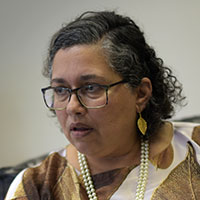
Suely Mara Vaz Guimarães de Araújo

PhD in Political Science from the University of Brasília. Senior Public Policy Specialist at the Climate Observatory. Former President of the Brazilian Institute of Environment and Renewable Natural Resources (IBAMA).

SELECTIVE PROCESS

YOUR JOURNEY STARTS HERE

The selection process for admission to the Professional Master's Program in Public Administration in the second semester of 2026 has 3 application periods. Check out the step-by-step guide we've prepared and learn more about our selection process:

STEP BY STEP

  • See the Notice

    Read the announcement carefully to understand all the stages of the selection process.

  • Write your resume.

    Highlight the key achievements of your academic and professional career.

  • Presentation letter

    Tell us what led you to pursue a Master's Program.

  • Interview

    Participate in an interview with 3 of our professors.

AREAS OF INTEREST

The IDP curriculum is interdisciplinary. The program has 5 areas of interest, allowing students from diverse backgrounds to delve into knowledge useful for their academic and professional careers.

The student has complete freedom to move between the 5 areas, choosing the subjects that seem most interesting for their career and for their academic and personal life.

01
Area

PUBLIC POLICIES AND SOCIAL DEVELOPMENT

This area of ​​interest is a space for study and reflection on the processes of formulation, implementation, monitoring, and evaluation of public policies and social programs aimed at the economic and social development of the country.
02
Area

Contemporary Public Management and State Modernization

Area of ​​interest II is part of the broader debate on the roles and challenges of the contemporary state. It is dedicated to studying and researching new strategies and models for public administration management.
03
Area

Entrepreneurship, Technology and Innovation in the Public Sector

Area of ​​Interest III aims to equip students with practical and theoretical skills to foster innovation and entrepreneurial thinking in the public sector, as well as to implement technological solutions that assist in government management and in the processes of implementing, monitoring, and evaluating public policies.
04
Area

REGULATION, COMPETITION AND INFRASTRUCTURE

This area of ​​interest focuses on the study of the Regulatory State. In this sense, the area will offer the master's student the opportunity to understand, analyze, and improve the institutional framework of regulation currently in place in Brazil, as well as best practices observed around the world.
05
Area

LAW AND PUBLIC MANAGEMENT: CONTROL OF ADMINISTRATION, COMBATING CORRUPTION AND MANAGEMENT OF THE JUDICIARY

This area of ​​interest is dedicated to the integrated study of Law and Public Management, focusing on administrative control, strategies to combat corruption, and the efficiency of the Judiciary. The disciplines offer a comprehensive view of the intersection between management, public policies, and law, exploring topics ranging from the role of Courts of Auditors to efficient management practices in the judiciary and alternative methods of conflict resolution.
06
Area

Evidence-Based Public Policies

This area of ​​interest is dedicated to training professionals capable of producing, interpreting, and using empirical evidence in the decision-making process in the public sector. The courses offered cover everything from the fundamentals of quantitative research and programming applied to data analysis to advanced impact assessment techniques, with an emphasis on practical application to real databases from the Brazilian Public Administration. The aim is to equip doctoral students with the analytical tools necessary to engage with evidence, conduct methodologically rigorous evaluations, and improve decision-making in the processes of formulating, monitoring, and evaluating public policies and government programs.